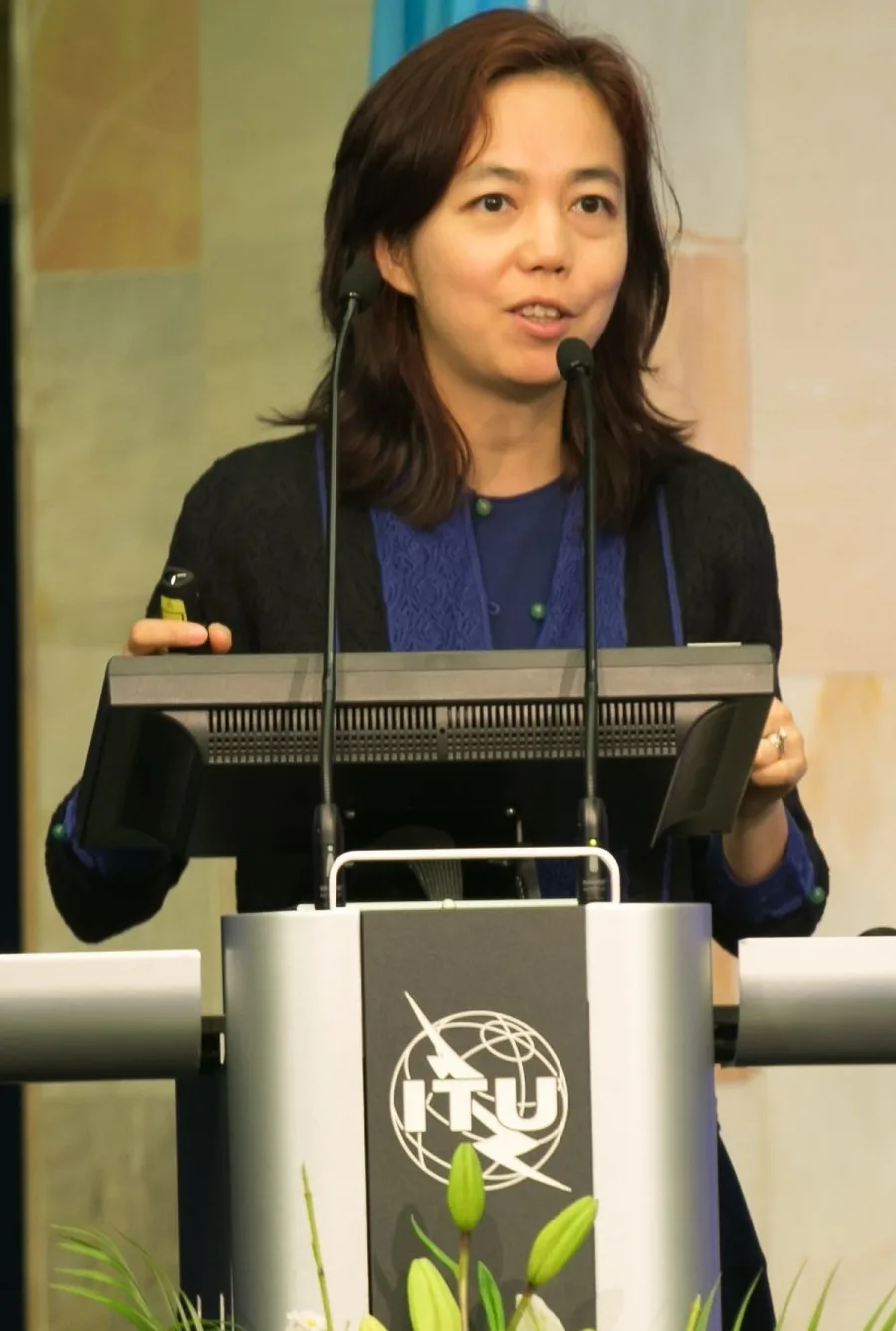
Fei-Fei Li
A Chinese-born AI researcher whose path from immigrant student to Stanford professor helped shape modern computer vision through ImageNet and human-centered AI.
Fei-Fei Li is one of the most visible figures in modern artificial intelligence. Her work is strongly connected to ImageNet, a large-scale visual dataset that became a turning point for computer vision and deep learning research. At the same time, her public work often emphasizes that AI is not only a technical field, but also a human and social one.
Early path
Li was born in China and moved to the United States as a teenager. Public interviews describe a path shaped by migration, family responsibility, school, work, and scientific curiosity rather than by the stereotype of a person who had a perfect, linear route into technology from childhood.
Her story is useful for this project because it shows that a career in AI can begin with uncertainty, adaptation, and practical responsibilities. The path into STEM is not always smooth, but it can still lead to high-impact research.
Turning point
A major turning point in her career was the development of ImageNet. The idea was simple but ambitious: computer vision needed a much larger and better structured dataset to help machines learn from images. At the time, this kind of data-driven approach was not universally accepted as the future of AI research.
ImageNet later became one of the foundations for major progress in visual recognition. It helped show that breakthroughs in AI often come not only from algorithms, but also from infrastructure, datasets, and the persistence to build something that others may initially underestimate.
Work and impact
Li became a professor at Stanford University and helped build the Stanford Institute for Human-Centered Artificial Intelligence. Her work connects computer vision, cognitive neuroscience, machine learning, and the social responsibility of AI.
She also co-founded AI4ALL, an initiative that works to increase diversity and inclusion in artificial intelligence. This makes her especially relevant as a role model: her career is not only about succeeding in AI, but also about widening access to the field.
What readers should take away
Fei-Fei Li’s story challenges the idea that AI belongs only to people who had early access, perfect confidence, or a standard academic background. Her path shows that migration, responsibility, curiosity, and persistence can all become part of a STEM identity.
For students, the message is clear: you do not need to fit the stereotype of an AI researcher before you begin. You can grow into the field through projects, mentors, questions, and the willingness to build something meaningful.