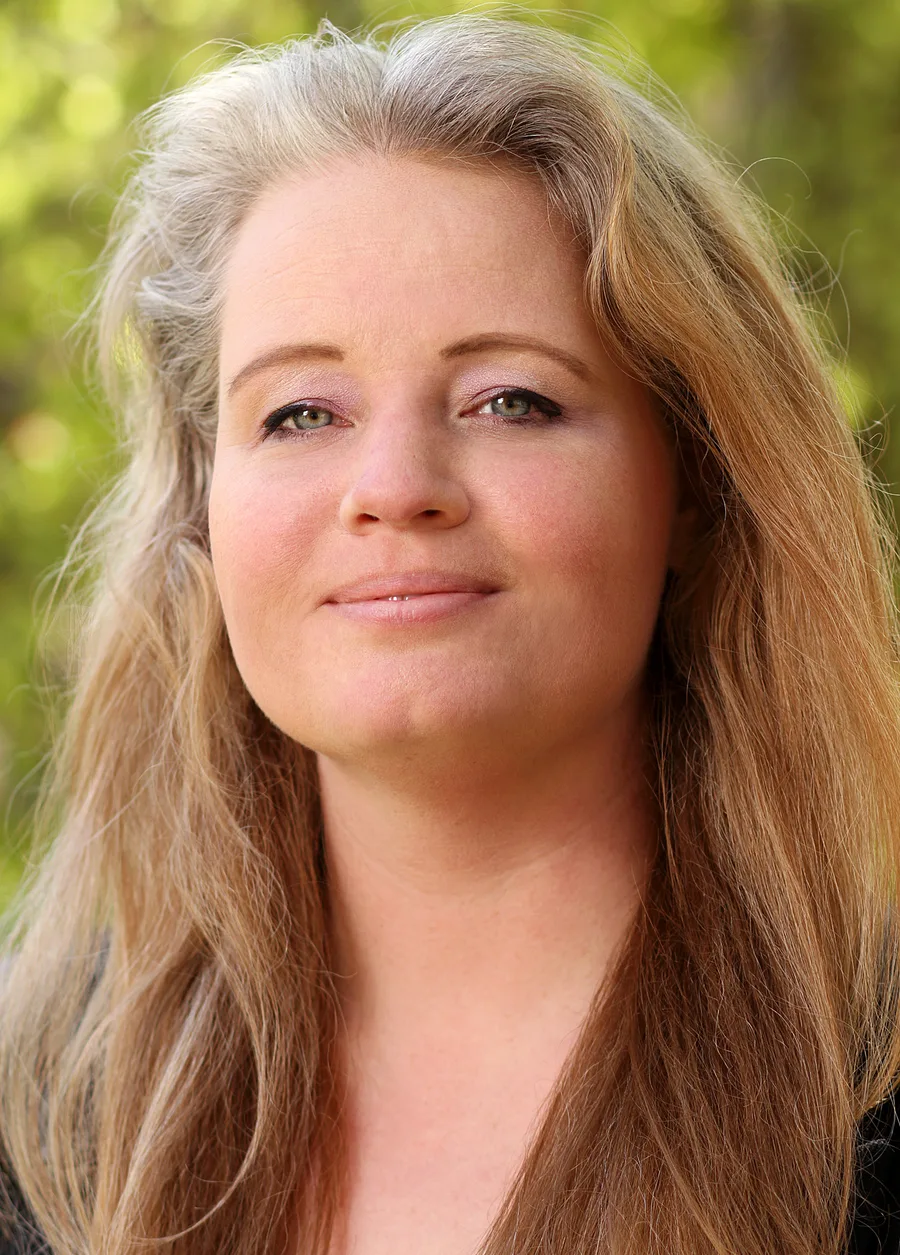
Katharina Zweig
A computer scientist who connects AI, algorithms, society, and public education through socioinformatics and algorithm accountability.
Katharina Zweig is a computer scientist known for connecting algorithms, artificial intelligence, society, and public understanding. Her work in socioinformatics and algorithm accountability focuses on how computational systems affect people and institutions.
Her story is a strong fit for this project because it makes visible a side of IT that is often missing from stereotypes: questioning systems, explaining technology, and asking when algorithms should or should not be used.
Early path
Zweig’s path into computer science was interdisciplinary. She studied fields connected with biology and informatics before building a research focus on networks, algorithms, and the social consequences of computational systems.
This makes her a useful role model for students who do not see themselves as fitting a narrow “pure programmer” image. Technical careers can grow from combinations of interests.
Socioinformatics and accountability
Zweig helped establish socioinformatics as a field that studies the interaction between information systems and society. Through the Algorithm Accountability Lab, her work addresses how automated systems can be evaluated, explained, and criticized.
This is especially important in the age of AI. Algorithms are not neutral objects floating outside society. They are designed, deployed, interpreted, and challenged in social contexts.
Public communication
Zweig is also known for public communication about AI and algorithms. She writes and speaks about the limits of algorithmic decision-making and the need to understand where technology can actually work.
Her quote, “Technology should only be used where it can work,” captures a practical and ethical approach to computing. It is not anti-technology; it is about responsible technology.
What readers should take away
Katharina Zweig’s story shows that IT needs people who can connect technical systems with social questions. If you are interested in fairness, public debate, explanation, or policy, there are meaningful paths into AI and computing.
For students, her career is a reminder that asking critical questions is not outside STEM. It can be one of the most important contributions to building better technology.