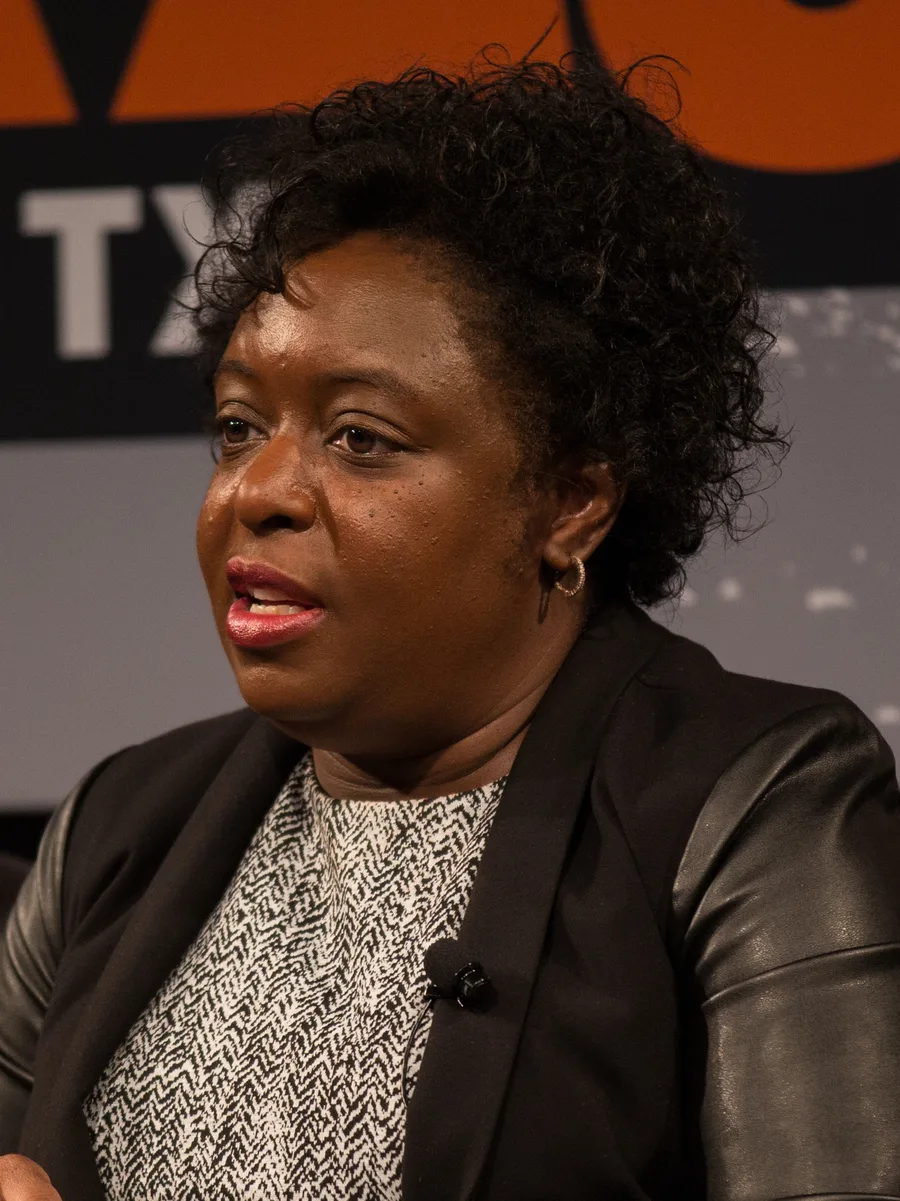
Kimberly Bryant
An African American electrical engineer who founded Black Girls Code to create more welcoming pathways into technology for Black girls and girls of color.
Kimberly Bryant is an African American electrical engineer and technology education advocate. She is best known as the founder of Black Girls Code, an organization created to give Black girls and girls of color earlier, more supportive access to programming and technology.
Her story fits this project especially well because it is not only about one person’s career. It is also about changing the environment around technology so that more people can imagine themselves belonging there.
Early path
Bryant grew up in Memphis, Tennessee, and became interested in mathematics and science at a young age. She studied engineering at Vanderbilt University and earned a degree in electrical engineering, with additional focus on computer science and mathematics.
Her path shows how important early encouragement can be. She entered a field where Black women were rarely visible, and that lack of visibility later became a central reason for her activism in technology education.
Entering industry
Before founding Black Girls Code, Bryant worked in technical roles in engineering, biotechnology, and pharmaceutical companies. Her career included work in environments where she was often one of very few Black women.
This experience is important for a role-model profile because it shows that underrepresentation is not only a question of getting into STEM. It can also shape everyday experiences after someone has already entered the field: who is in the room, who is expected to lead, who is mentored, and who feels isolated.
Founding Black Girls Code
A major turning point came when Bryant’s daughter became interested in learning programming. While looking for suitable coding opportunities, Bryant noticed that many learning spaces were not designed with girls like her daughter in mind. They were often male-dominated and rarely included other Black girls.
In response, Bryant founded Black Girls Code in 2011. The goal was not only to teach programming skills, but also to create a space where girls of color could see technology as something they were allowed to shape, not merely consume.
Work and impact
Black Girls Code helped make the lack of representation in tech education more visible. Through workshops, classes, and public advocacy, Bryant pushed the idea that inclusion must begin early. Waiting until university or the job market is often too late if young people have already received the message that technology is not for them.
Her work is a strong example of STEM impact beyond a single invention or company. It shows that building educational pathways, mentoring communities, and changing public narratives are also meaningful contributions to the technology field.
What readers should take away
Kimberly Bryant’s path shows that role models do not only open doors for themselves. They can build doors for others.
For students, her story is a reminder that feeling isolated in a technical space is not proof that you do not belong. Sometimes it is a sign that the space itself needs to change. Technology becomes stronger when more people are invited to learn, build, question, and lead.