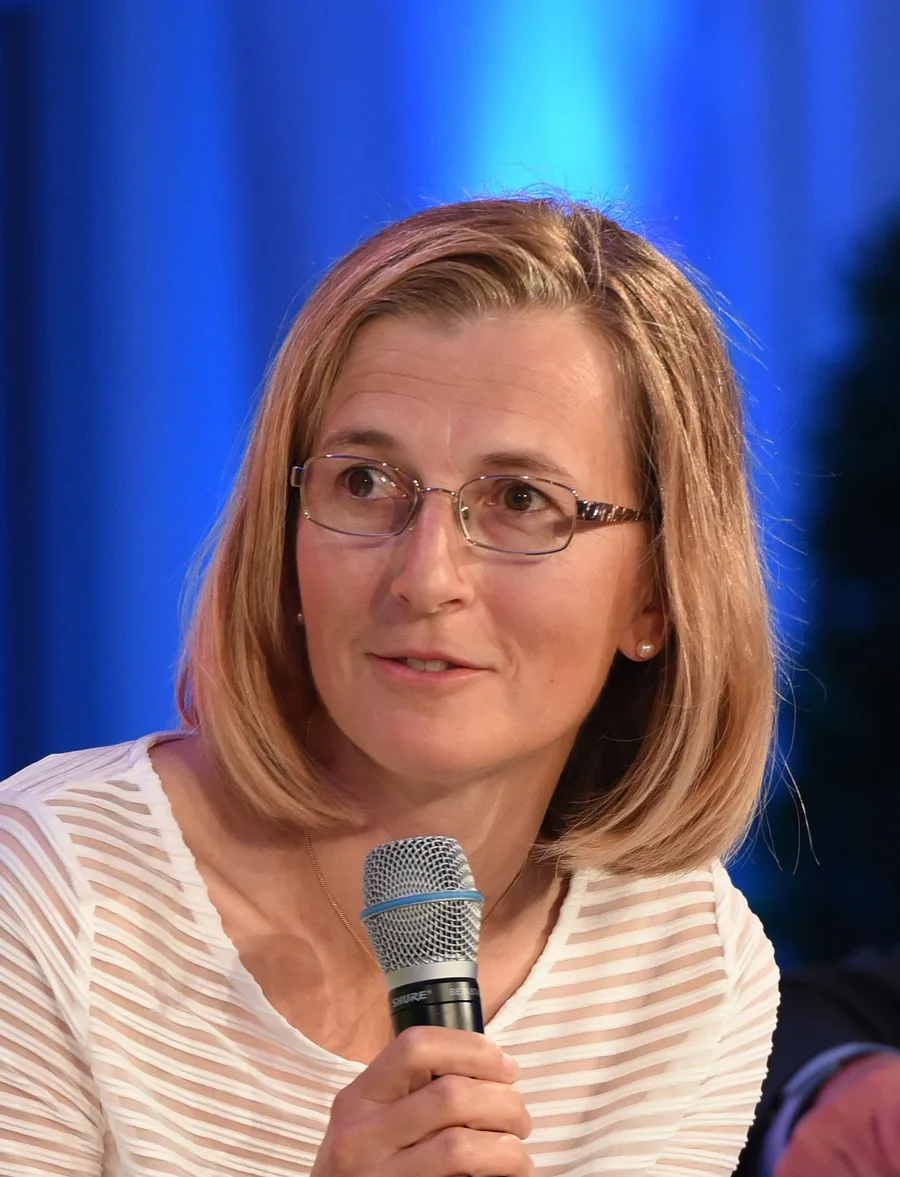
Monika Henzinger
A leading theoretical computer scientist whose career spans dynamic algorithms, privacy, patents, major research institutions, and industry leadership.
Monika Henzinger is a theoretical computer scientist known for her work on algorithms, graph theory, web search, and privacy. Her career includes university research, industrial research leadership, and major scientific recognition.
Her story is useful for this project because theoretical computer science is often presented as highly abstract and inaccessible. Henzinger’s career shows that deep mathematical thinking can connect to real systems, patents, data, privacy, and internet-scale technology.
Early path
Henzinger studied computer science and built an international academic path that included a PhD at Princeton and early faculty work in the United States. She later worked in major research environments, including industry research, before returning to academic leadership in Europe.
This path shows that a STEM career can move between countries, institutions, and sectors. Research careers are not always a straight line inside one university.
Algorithms and systems
Henzinger’s research includes dynamic graph algorithms, privacy, web search, and algorithmic foundations for large-scale systems. These topics are central to modern computing, even when users do not see them directly.
Algorithms decide how information is processed, updated, ranked, and protected. Work in this area therefore shapes the invisible infrastructure behind many digital services.
Recognition and visibility
Henzinger received the Wittgenstein Prize, one of Austria’s highest research awards, and has been associated with numerous patents and publications. Her career makes visible that women have shaped not only applied technology, but also the theoretical foundations of computer science.
That visibility matters because stereotypes often imagine theory and algorithms as spaces for a narrow type of person. Her work helps broaden that image.
What readers should take away
Monika Henzinger’s story shows that computing also needs people who enjoy abstraction, precision, and long-term problem solving. Theoretical work can become part of search engines, privacy systems, and data structures that affect everyday technology.
For students, her path is a reminder that there are many forms of impact in IT. Some contributions happen through products, others through ideas that make entire classes of systems possible.