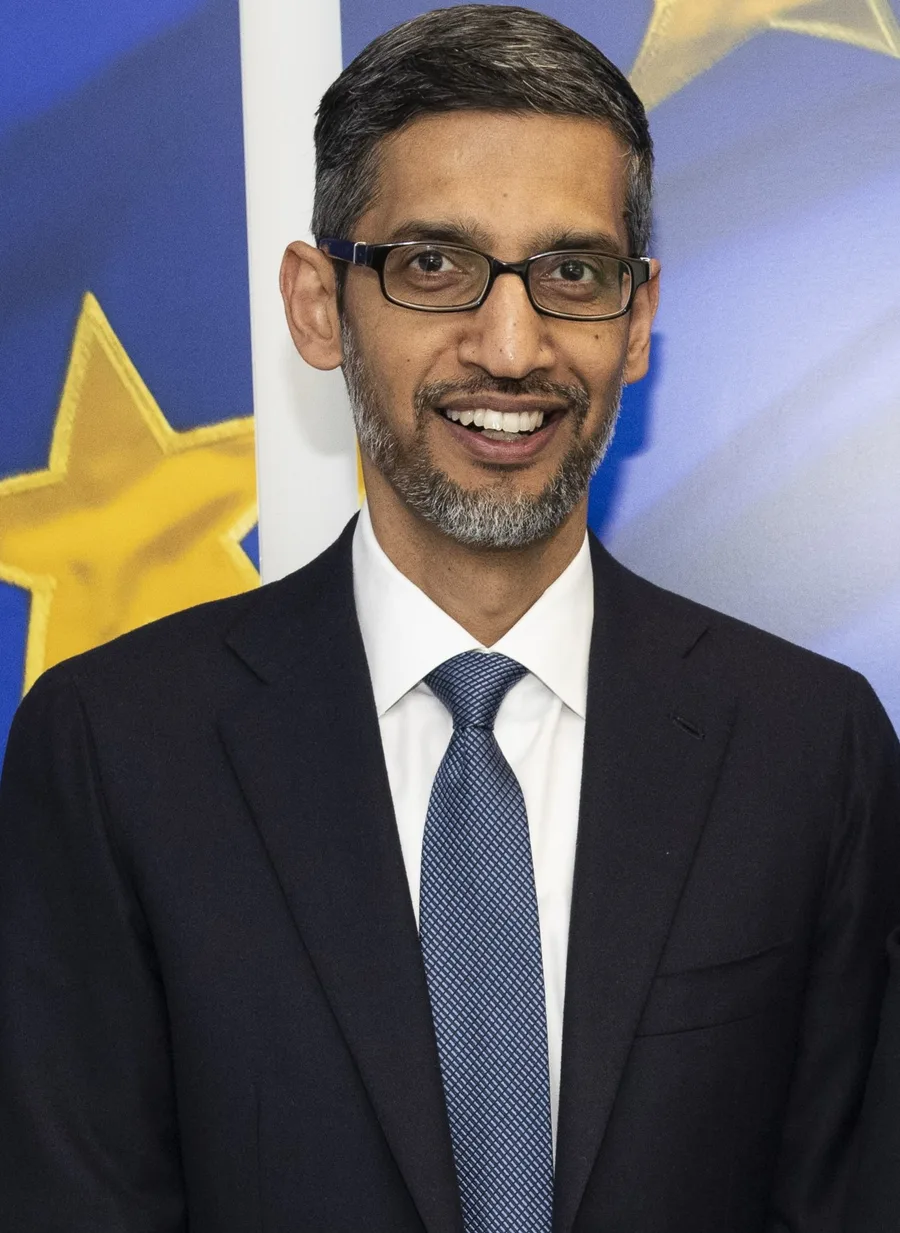
Sundar Pichai
An Indian-born engineer and product leader whose path from Chennai to Google shows how technical careers can grow through education, product thinking, and calm leadership.
Sundar Pichai is an Indian-born technology executive best known as the CEO of Google and Alphabet. His story is useful for this project because it does not fit the narrow image of a person who must start as a childhood coding prodigy to belong in tech. His path began in engineering, moved through product work, and eventually became a leadership role shaping products used by billions of people.
Early path
Pichai grew up in India and studied metallurgical engineering at the Indian Institute of Technology Kharagpur. He later continued his education in the United States, earning a master’s degree from Stanford University and an MBA from the Wharton School.
For a project about real paths into IT, this matters because his starting point was not pure computer science. He entered technology through engineering, materials science, and product thinking. His story shows that STEM careers can develop across disciplines and that people can move toward software and digital products from adjacent technical backgrounds.
Finding his role in technology
Before joining Google, Pichai worked in engineering and consulting. At Google, he became strongly associated with product leadership, especially around Google Chrome and ChromeOS, and later took on responsibility for major product areas such as Android.
This part of his story challenges another stereotype: that success in technology is only about writing code alone. Pichai’s public career is also about listening to users, coordinating teams, understanding technical trade-offs, and turning complex systems into products that many people can actually use.
Minority context and visibility
As an Indian immigrant in the United States who became one of the most visible technology leaders in the world, Pichai can be presented as an example of global mobility in STEM. His story should be handled carefully: he is now extremely powerful and privileged, so the focus should not be on portraying him mainly as disadvantaged. Instead, his profile can show how international educational paths, migration, and cross-cultural experience can become part of a STEM career.
For students from migrant or international backgrounds, his story may be useful because it shows that technical leadership is not limited to one nationality, accent, personality type, or childhood story.
Work and impact
Pichai’s impact is connected to the scale of the products he helped lead. Chrome, Android, Search, cloud services, and AI tools are all part of the broader environment shaped by Google and Alphabet leadership.
At the same time, his role also raises important questions for a critical STEM project: large technology companies have enormous social influence, and leadership in tech includes responsibility for privacy, competition, labor, misinformation, and AI safety. A role-model story about Pichai can therefore be more than a success story; it can also open discussion about what ethical leadership in global technology should mean.
What readers should take away
Sundar Pichai’s path shows that a career in IT can begin outside a traditional computer science route. Engineering, communication, product sense, and the ability to work across cultures can all become part of a technology career.
For students, the key lesson is not that everyone should aim to become a CEO. The more realistic takeaway is that technical careers are flexible: you can start in one field, learn new skills, move across disciplines, and still contribute to major technological change.