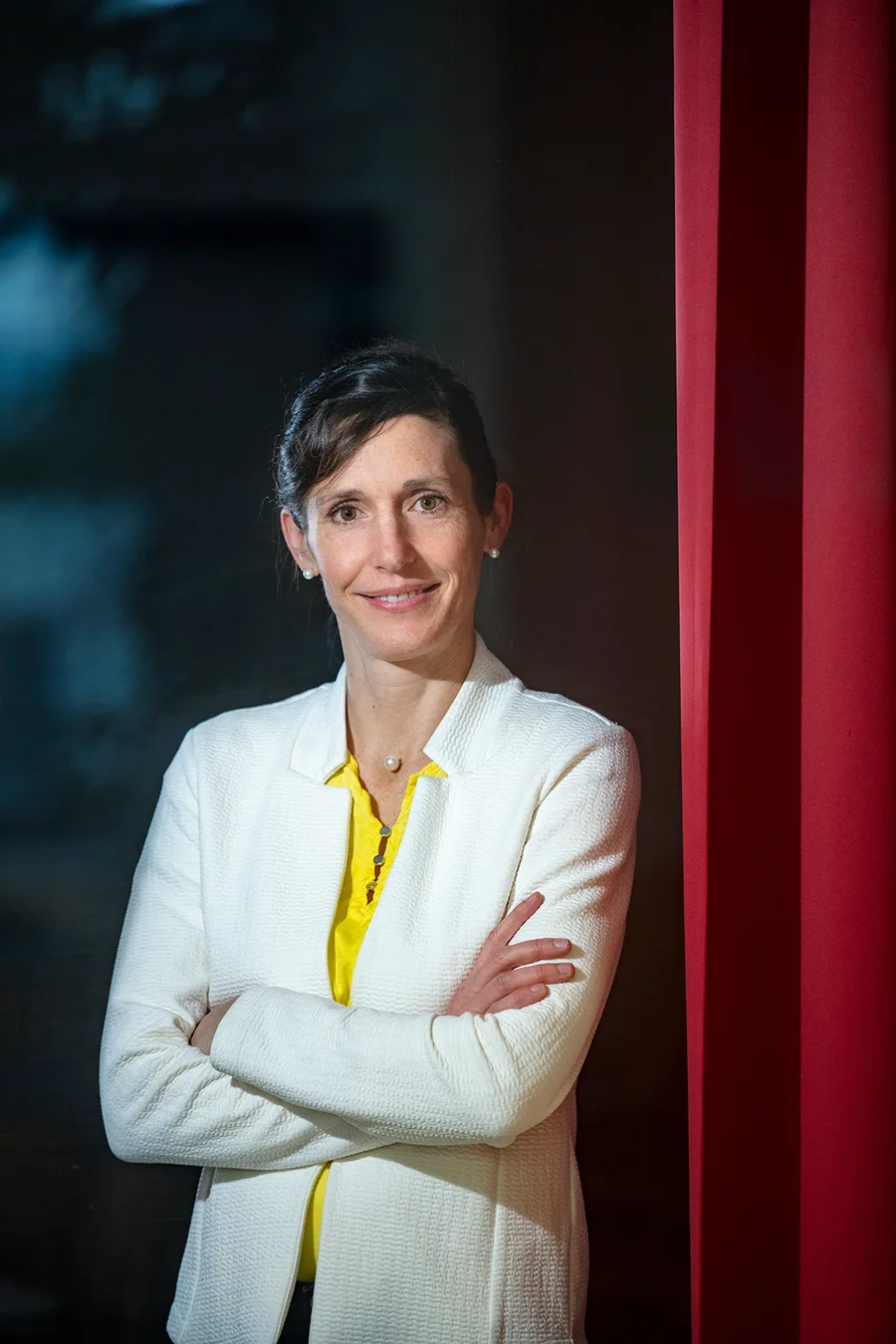
Tanja Stadler
A mathematician and computational biologist whose work connects algorithms, evolution, genomics, and public-health decision-making.
Tanja Stadler is a mathematician and computational biologist whose work connects evolution, phylogenetics, genomics, algorithms, and public health. She is associated with ETH Zurich and computational methods for understanding how biological systems change over time.
Her story fits this project because it shows that computing is not limited to software products. Algorithms and data analysis can help answer urgent scientific and social questions, including how diseases spread.
Early path
Stadler’s background combines mathematics, statistics, and biology. Her path shows how quantitative skills can move into life sciences and public-health questions.
This interdisciplinary route is useful for students who enjoy mathematics or data but do not necessarily imagine themselves in a traditional IT job. Computational work can happen in biology, medicine, epidemiology, and environmental science.
Computational evolution and public health
Stadler’s research uses mathematical and computational models to study evolutionary processes and phylogenetic trees. During the COVID-19 pandemic, this type of expertise became especially visible because genomic and epidemiological data helped scientists understand viral spread.
Her work also connects to public communication and scientific advising, showing how computational research can support decisions beyond the laboratory.
A broader image of technology
Stadler’s career challenges the stereotype that technical fields are only about building apps or writing business software. Sometimes the most important computational work is about modeling reality carefully enough to support science and public health.
Her quote, “The virus is here to stay,” reflects the public-facing side of scientific communication: translating complex analysis into a message people can understand.
What readers should take away
Tanja Stadler’s story shows that STEM careers can connect mathematics, computation, biology, and society. Technical skills become powerful when they help explain complex systems and support real-world decisions.
For students, her path is a reminder that if you like data, models, and scientific questions, there are many ways to belong in technology-related fields.