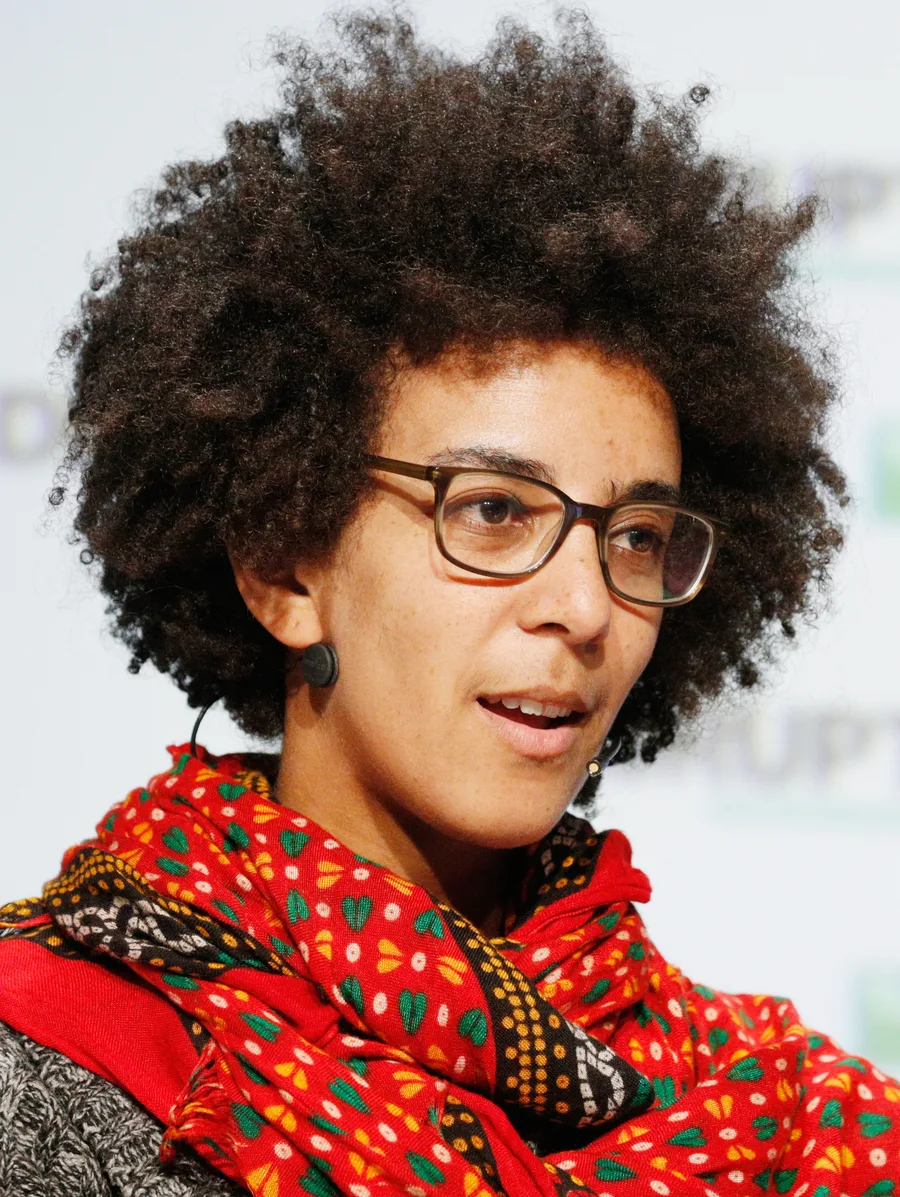
Timnit Gebru
An Ethiopian-Eritrean computer scientist whose work on algorithmic bias and power structures helped make AI ethics a central public issue.
Timnit Gebru is a computer scientist known for her work on algorithmic bias, data, fairness, and the social consequences of artificial intelligence. She is also a co-founder of Black in AI and the founder of the Distributed AI Research Institute, often called DAIR.
Early path
Gebru’s public biography is closely connected to migration, identity, and the experience of being underrepresented in AI research. Her work is not only technical; it also asks who builds AI systems, who benefits from them, and who is harmed when technology is designed without the people most affected by it.
This makes her a strong role model for a project about real paths into IT. Her career shows that entering STEM can also mean questioning the structures of the field itself.
Turning point
One of Gebru’s major research areas is the analysis of bias in large datasets and machine-learning systems. Her work has helped make algorithmic discrimination visible to a broader public and has influenced how companies, universities, and policymakers discuss AI accountability.
A second turning point was institutional: after conflict around ethical AI research in industry, Gebru founded DAIR as an independent research institute. This step shows another possible career path in STEM: when existing institutions are limiting, researchers can create new spaces for inquiry and community.
Work and impact
Gebru’s work connects computer vision, data mining, fairness, and AI ethics. She has helped build communities for Black researchers in AI and has pushed for more attention to power, labor, data extraction, and social harm in machine learning.
Her story is especially useful because it shows that technical excellence and social critique do not contradict each other. In responsible AI, they often belong together.
What readers should take away
Timnit Gebru’s path shows that belonging in STEM does not mean staying silent about problems inside STEM. A person can be a researcher, a critic, a founder, and a community builder at the same time.
For students, her story suggests that your questions about fairness, justice, and representation are not distractions from technology. They can become the center of meaningful technical work.